Thursday, August 1, 2013

Airline traffic rises on winds from Asia, eurozone


World airline traffic grew by 5.9 per cent in June, driven by strong demand from the Asia-Pacific region and helped by a steadying of the business climate in the eurozone, the International Air Transport Association said on Wednesday.

In the first six months of the year, traffic increased by 4.8 per cent on a 12-month comparison, and the global industry could turn in an overall net profit this year of nearly US$13.0 billion IATA said.

"The stability in the eurozone, albeit tentative, is giving a boost to business and consumer confidence," IATA managing director Tony Tyler said.

The overall passenger load factor, a critical measure of the percentage of seats filled, was 81.7 per cent which "shows that airlines are efficiently meeting increasing demand for travel," he said.

But IATA warned that the emerging economies of Brazil, Russia, India and China, the so-called BRIC countries, was slowing.

Much of the growth of airline traffic is being driven by growth of the economies, and of business and tourist travel, in and from the Asia-Pacific region. This is also a big factor in estimates by airliner manufacturers Airbus and Boeing of huge future demand for aircraft.

Another key factor for airlines is the cost of fuel, and Tyler noted that "oil prices remain high".

However, "the industry is still on track to make US$4.00 per passenger this year for a global net profit of US$12.7 billion.

"But there is little margin for error and even a small change in the second half of the year could shift the outlook significantly," Tyler said.

SOURCE


Wednesday, July 31, 2013

Air France to cut 2,500 jobs next year


Air France on Wednesday confirmed its intention to cut around 2,500 jobs in 2014 as part of a wide-ranging restructuring drive that has already seen thousands take voluntary redundancy.

The airline has been struggling to cope with the rise of low-cost airlines and competition from Middle Eastern and Asian carriers.

A spokesman said the proposed cuts would be made without forced redundancies, saying the exact amount "will be discussed and quantified with unions this fall. It could be a little more than half of the redundancies identified in 2012."

The measure is part of a major restructuring drive called Transform 2015, which has already seen more than 5,000 employees take voluntary redundancy.

The news comes after the company's CGT union branch earlier Wednesday said management had broken the news to employee representatives at a works council meeting.

The restructuring drive has helped parent company Air France-KLM cut huge losses although it says more cost-saving is needed.

The group last week announced net losses of 793 million euros for the first half of 2013, against wider losses of 1.27 billion euros in the first half of last year.

Chief executive Alexandre de Juniac at the time welcomed improving results, but warned that further measures would be adopted to reduce costs, including staffing cuts.

SOURCE


Sunday, July 28, 2013

SIA cuts pilot training time


Singapore Airlines (SIA) has cut pilot training time by three months and will close one of its two facilities in Australia. Instead of 90 weeks, cadets will undergo a 78-week course - in Singapore and at SIA's Jandakot facility in Perth.

The school in Maroochydore, Queensland, which opened in 2002, will be shut down next March, said SIA spokesman Nicholas Ionides. The changes reflect developments in training technology and procedures, he added.

He told The Straits Times: "This is not intended as a cost-cutting measure and is not related to a surplus of pilots." There will be no impact on the quality of training, he stressed.

SIA froze cadet pilot recruitment about 18 months ago amid slower-than-expected growth, and has asked junior pilots to volunteer for unpaid leave. Its pilots are trained by its subsidiary, Singapore Flying College.

Before, a cadet would spend 34 weeks in Singapore, 44 in Jandakot and the last 12 weeks at the Maroochydore school where they undergo jet aircraft training in small planes. Today, state-of-the-art training devices are capable of replicating realistic operational scenarios, Mr Ionides said.

Cadets are also exposed to the jet environment and curriculum very early in their pilot training.

This negates the need for the specific jet exposure offered at Maroochydore, he said. Additional training modules have also been incorporated into the programme that new pilots undergo in Singapore before they become first officers.

At the Maroochydore facility, 12 out of 15 staff have left. The last few will stay until closing day, Mr Ionides said. The school's three flight simulators and four Cessna C510 Mustang aircraft will be sold.

Pilot training experts pointed out that increasingly, airlines are adopting programmes that aim to put new pilots into commercial jets with more relevant hands-on experience.

Instead of spending as much as 80 per cent of training time in a light aircraft, new pilots now make more use of flight simulators and techniques that build interpersonal and communication skills to prepare them to operate in a multi-crew environment.

The new multi-crew pilot licence programme is certified by global civil aviation bodies including the International Civil Aviation Organisation. It is also supported by the International Air Transport Association, the global voice of airlines.

SOURCE


Saturday, July 27, 2013

AirAsia Japan to cancel hundreds of flights


AirAsia Japan has said the budget carrier will cancel hundreds of flights over two months before it ceases operations under the current brand at the end of October.

AirAsia Japan, operated jointly by Malaysia-based AirAsia and major Japanese carrier All Nippon Airways (ANA), will suspend 14 daily flights from September 1 to October 26, according to a company statement.

The carrier said the cancellations, which will reportedly affect 14,000 passengers, was because of a lack of planes to service all its routes.

The affected routes include flights linking Seoul to the central Japanese city of Nagoya and Tokyo to the northern city of Sapporo.

The carrier will cease operations by the end of October, just over a year after it started flying out of Tokyo's Narita airport in August.

Announcing the dissolution of AirAsia Japan in June, the Malaysian carrier cited a "fundamental difference of opinion between its shareholders on how the business should be managed, from cost management to where the domestic business operations should be based".

ANA, however, said the venture dissolved because it was not well known in Japan and could not register profits.

The Japanese carrier plans to launch a new budget brand in November.

SOURCE

Friday, July 26, 2013

Tigerair's Q1 losses climb to $33m


Losses at Tigerair for the three months to June 30 more than doubled to about $33 million compared with the same quarter last year, dragged down by the performance of its associates in Indonesia and the Philippines as well as higher expenses.

This was despite the group reporting a much narrower operating loss from $11.8 million to $6.2 million during the quarter. Overall turnover grew 30 per cent to $236.2 million, as Tigerair carried more passengers in its key Singapore and Australian markets, the group said yesterday.

The airline comprises Tigerair Singapore and Tigerair Australia, and associates Tigerair Mandala (Indonesia) and Tigerair Philippines.

Group chief executive officer Koay Peng Yen said the improvement in operating performance was due to the Singapore and Australian markets recording "significant increases in traffic volume in spite of a traditionally weak quarter for the air travel industry".

Total spending rose for the first quarter by 25.5 per cent to $242.4 million. During the quarter, Tigerair flew close to two million passengers, or a 36 per cent increase from a year ago.

The pick-up in Australia was significant given the big hit the airline took in July 2011 when the Australian civil aviation authority grounded all its planes over safety concerns. Since then, Tigerair has restructured its Australian business and recently sold a 60 per cent stake to Virgin Australia.

Going forward, the airline will continue to expand its business in South-east Asia with new aircraft and new destinations flown from Singapore, Indonesia and the Philippines, Mr Koay said during a media teleconference yesterday after the numbers were released.

In Indonesia, the group will continue to build its market presence while the Philippine arm will focus on growth in potential markets such as China.

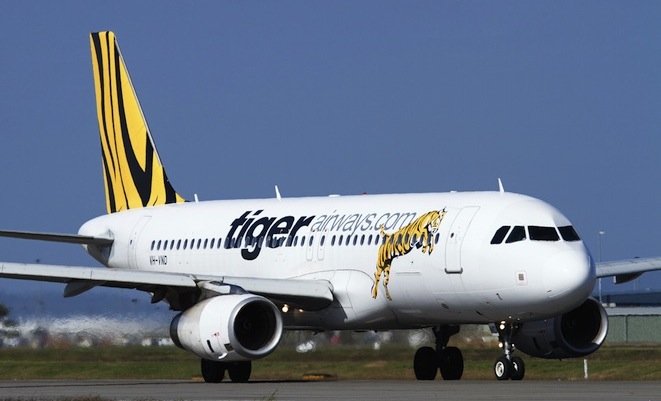
To grow market share and boost shareholder value, the group recently unveiled a new brand and look - ditching its leaping tiger icon and changing its name from Tiger Airways to Tigerair.

Mr Koay said: "The recent brand refresh marks a significant milestone." The new Tigerair will continue to invest in new initiatives to make travel "a stress-free affair" for customers, he said.

SOURCE


Thursday, July 25, 2013

Singapore Airlines Q1 net profit up 56%


Singapore Airlines (SIA) said Thursday its net profit in the first financial quarter rose 56 percent from the year before, mainly due to one time gains.

Net profit of S$122 million (US$96 million) in the April-June period was driven largely by proceeds from the sale of surplus aircraft and gains after it sold its stake in Virgin Atlantic to Delta Air Lines, SIA said in a statement.

Revenue climbed 1.7 percent to S$3.84 billion.

The Asian carrier received a net gain of S$336 million from the sale of its stake in Virgin Atlantic to the US carrier.

However, SIA said also suffered a "restructuring impairment cost" totalling S$293 million on four surplus freighter aircraft it removed from the operating fleet and marked for sale.

"The group's operating environment continues to be impacted by the uncertain global economic climate and high fuel prices," the airline said, commenting on the market outlook.

Forward passenger bookings are likely to be higher in the next few months but "yields are expected to be weaker as a result of the intense competitive environment".

Cargo demand is also forecast to "remain depressed", SIA said.

SIA is facing stiff rivalry from Middle Eastern and other Asian carriers as well as from budget airlines which have grown in number in Asia.

SIA reported a net profit in the year ending March of S$379 million, up 12.8 percent, boosted by surplus from the sale of aircraft, spares and spare engines.

Shares of SIA fell 0.58 percent to close at S$10.25 Thursday before the results were released.

SOURCE


Tigerair launches MPL program with CAE Oxford


The Tigerair Group has entered an arrangement with CAE Oxford Aviation Academy (OAA) to offer training for multi-crew pilot licences (MPL) in Melbourne and Singapore.

Under the agreement, the OAA will train new A320 first officers for the Singapore-based carrier in a competency-based MPL program to be conducted at training locations in Singapore and Melbourne. Following a joint CAE Oxford Aviation Academy and Tigerair assessment and selection process, an initial group of 10 cadets will enrol in the MPL program later this year.

In support of this program as well as other regional programs, CAE OAA plans to open an ab initio ground school training location within CAE’s new training centre in Singapore.

Following the delivery of the ground school training phase in Singapore, the Tigerair cadets will undertake the core and basic phases of flight training at CAE Oxford Aviation Academy’s flight school in Melbourne before returning to Singapore to complete the intermediate and advanced phases of the training on CAE’s A320 full flight simulator.

“Tigerair’s growth requires a steady supply of highly qualified and well-trained pilots. We look forward to partnering with CAE Oxford Aviation Academy, which offers the world’s premier MPL training curriculum, to produce the next generation of pilots,” said Ho Yuen Sang, managing director of Tigerair.

SOURCE