Showing posts with label Britain. Show all posts

Wednesday, February 3, 2016

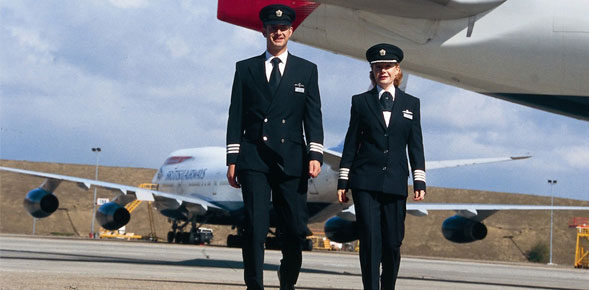
British Airways Direct Entry Pilot - A320


Job DescriptionClosing Date: 21 February 2016
The Direct Entry Pilot Scheme is for experienced high calibre pilots who want to develop their careers with one of the most progressive international airlines in the business.

The Individual

Requirements for all pilots:
  • A current JAR-FCL or EASA Flight Crew Licence with Class 1 medical to apply (when you join British Airways you must hold a UK issued EASA Flight Crew Licence)
  • ICAO Level 6 proficiency in English language
  • A valid passport (with minimum of 12 months before expiry date) allowing unrestricted worldwide travel
  • The unrestricted right to live and work in the UK
  • To be considered for our current vacancies you will need:
  • To hold a current A320 type rating with 500 hours on type
  • Successful candidates will be entered into our hold pool, from which an offer onto either the Gatwick or Heathrow based A320 series fleets may be made

As a Person, you will
  • You will need a first class flying record and a good level of physical fitness, and will be able to satisfy British Airways' medical requirements
  • Your height will be between1.57m (5'2") and 1.91m (6'3") with weight in proportion to height (height is accurately determined during the assessment process). Qualified pilots who are taller than 1.91m may submit an application but will be required to undergo a functionality check to confirm their ability to meet the requirements of the seating positions in the British Airways fleet of aircraft
  • You will be passionate about a career as a pilot with British Airways. While there are opportunities to move fleets with British Airways, initial fleet postings normally last a minimum of five years
  • You will already be comfortable with taking control of your own learning and professional development, and both willing and able to self-study, read widely, and continue to develop as a safety conscious professional pilot for the duration of your flying career
  • You will be comfortable flying a busy schedule, with BA flights operating 365 days a year You will be comfortable working with colleagues and customers from all cultures and nationalities, and able to identify, and work, with cultural differences
  • Finally, you will have a genuine enthusiasm for our customers, and finding ways to exceed their expectations when they fly with us. You will be able to put our customers' needs at the heart of your decision making, and will be comfortable dealing with our customers face to face both when things are going to plan, but also when they're not

Application ProcessAll applicants are required to submit their CV and answer the following question. Please prepare your answer in advance: 

1. In 600 words or less, please answer the following:
  • Describe your reasons behind applying to become a pilot with British Airways?
  • What can you bring to our organisation and customers to assist British Airways in meeting the operational and business challenges of the commercial aviation market?
2. What do you believe constitutes effective leadership on the flight deck? In the past, how have you demonstrated these skills and qualities? (Max 300 Words)

3. Describe a situation in which you exceeded your customers' expectations. (Max 300 Words)


Please note the following information if you have made a previous application to us. We cannot accept a new application within:

6 Months if you were unsuccessful at initial application screening
12 months if you were unsuccessful at any stage of testing/interview/simulator assessment. You are welcome to reapply 12 months from the date you attended initial aptitude testing


Saturday, April 11, 2015

British Airways First Officer


Job Description
Closing Date: 10 May 2015


The Direct Entry Pilot Scheme is for experienced high calibre pilots who want to develop their careers with one of the most progressive international airlines in the business.


The Individual
Requirements for all pilots:


A current JAR-FCL or EASA Flight Crew Licence with Class 1 medical (please note: due to CAA rules you will need a UK issued EASA licence when you join British Airways)
ICAO Level 6 proficiency in English language
A valid passport (with minimum of 12 months before expiry date) allowing unrestricted worldwide travel
The unrestricted right to live and work in the UK


To be considered for our current vacancies you will need:
To hold a current type rating and a minimum of 500 hours, or the required sectors, on an aircraft that satisfies CAP 804 FCL.730.A - Zero Flight Time Training course requirement. We would be particularly interested in hearing from candidates operating the A320/A350/747/757/767/777/787
Candidates applying from BA CityFlyer should apply through the internal eJobscan system (Please note: If you are currently a British Airways CityFlyer employee, please advise your line manager of your application, to ensure eligibility for this role)
You will be passionate about a career as a pilot with British Airways. The majority of postings will be as an A320 First Officer based at London Heathrow. While there are opportunities to move fleets with British Airways, initial fleet postings normally last a minimum of five years


As a Person, you will
Have a first class flying record and a good level of physical fitness, and will be able to satisfy British Airways' medical requirements
Be between1.57m (5'2") and 1.91m (6'3") in height with weight in proportion to height (height is accurately determined during the assessment process). Qualified pilots who are taller than 1.91m may submit an application but will be required to undergo a functionality check to confirm their ability to meet the requirements of the seating positions in the British Airways fleet of aircraft
Be passionate about a career as a pilot with British Airways, and interested in accepting a first posting as an A320 First Officer at either London Heathrow or London Gatwick. While there are opportunities to move fleets with British Airways, initial fleet postings normally last a minimum of five years
Already be comfortable with taking control of your own learning and professional development, and both willing and able to self-study, read widely, and continue to develop as a safety conscious professional pilot for the duration of your flying career You will be comfortable flying a busy schedule, with BA flights operating 365 days a year
Be comfortable working with colleagues and customers from all cultures and nationalities, and able to identify, and work, with cultural differences
A genuine enthusiasm for our customers, and finding ways to exceed their expectations when they fly with us
Be able to put our customers' needs at the heart of your decision making, and will be comfortable dealing with our customers face to face both when things are going to plan, but also when they're not


Application ProcessAll applicants are required to submit their CV and answer the following question. Please prepare your answer in advance:
In 600 words or less, please answer the following:
Describe your reasons behind applying to become a pilot with British Airways?
What can you bring to our organisation and customers to assist British Airways in meeting the operational and business challenges of the commercial aviation market?
What do you believe constitutes effective leadership on the flight deck? In the past, how have you demonstrated these skills and qualities? (Max 300 Words)
Describe a situation in which you exceeded your customers' expectations. (Max 300 Words)


Additional Website TextIf you are using a Mac computer, Google chrome or have firefox you will experience problems selecting the drop down options and be unable to submit your application. We recommend you use a windows computer or ipad to complete your application.


We suggest that you do not leave submission of your application until the last minute. In previous schemes we are aware that a significant number of applications are received just before the closure of the application window, which can cause problems.


Saturday, February 28, 2015

British Airways Future Pilot Programme 2015


Job Description
Closing Date 08 March 2015 at 23:59

Please note we reserve the right to close the application window before the published date

The Future Pilot Programme is the cadet pilot training programme from British Airways. Designed for aspiring pilots from all walks of life, the programme offers the chance to pursue a career as a pilot with one of the world’s most progressive airlines.

Please refer to www.bafuturepilot.com before applying. You will need to have reached a decision on your choice of Flight Training Organisation (FTO) and considered your finance options before starting your application.


Role Requirements

You will need:
To be between the ages of 18 – 55 on 1st September 2015
A valid passport (with minimum of 12 months before expiry date) allowing unrestricted worldwide travel
The unrestricted right to live and work in the UK
To have achieved 5 GCSEs at Grade C or above, including English Language, Mathematics and a Science (single or double award), excluding General Studies and either 3 A-Levels at Grades BBC or above, excluding General Studies and Critical thinking or an Honours Degree at 2:2 (or higher) or a pass (or above) in a higher degree such as MSc, MA, MPhil, DPhil, PhD, MBA
To be able to obtain and hold a EASA Class 1 medical and meet British Airways medical criteria (assessed via BAHS Medical Assessment at Waterside)
Height between 1.57m (5'2") and 1.91m (6'3") with weight in proportion to height (height is accurately determined during the assessment process). Candidates who are taller than 1.91m may submit an application but may be required to undergo a functionality check to confirm their ability to meet the requirements of the seating positions in the British Airways fleet of aircraft

The Individual

You will be excited by the prospect of frequent travel, but will also be recognisant of the fact that British Airways operates flights globally, day and night, every day of the year
You will be highly motivated towards a career as a pilot with British Airways
You will be ready, willing and able to undergo an intensive, full-time series of training courses in order to train as a commercial pilot, all the while applying your own high personal standards and intellect to achieve results
You will have sound hand-eye co-ordination skills, and skills in mechanical, mathematical and verbal reasoning
You will be able to manage varying workload, solve complex problems, and make sound decisions under pressure
You will exhibit the qualities of a strong team player, as well as the leadership qualities required of a future British Airways Captain

It goes without saying that you’ll be a natural communicator, with fluency in spoken and written English, and that you’ll relish the opportunity to deliver the very highest possible levels of safety and service for our customers.

Application Process

In order to apply for a place on the Future Pilot Programme you will need to apply using the online process. You will be asked a series of questions to determine your eligibility and suitability for the role, submit a CV, followed by application questions (cover letter).


1. As part of your application, we would like for you to submit a CV. Please ensure that your CV details (at least) the following (maximum 2 pages):
Work experience to date
Academic Achievements to date
Any other relevant interests/qualifications/awards/flying experience/courses/ air show attendances etc. which you would like to highlight to us
2. British Airways believes in investing in the future and that is why the Future Pilot Programme (FPP) has been developed to offer anyone with the right skills, passion and potential, the chance to realise their dream of becoming an airline pilot.

As part of your application, please submit a cover letter in which you detail (maximum 600 words):

a) Why you want to be a pilot
b) What you have done so far to make this dream a reality (Note: If you have applied for FPP previously, we are interested to also know what you have done to realise this goal since your last application)
c) Why you want to join British Airways

We wish you the very best of luck with your application.


Tuesday, October 7, 2014

Virgin Atlantic to shut down UK short-haul service


Richard Branson's Virgin Atlantic will shut its short-haul domestic service in Britain, the airline said on Monday (Oct 6), partly owing to a lack of demand for connections with its long-haul operations.

The carrier said in a statement that it will cease its so-called "Little Red" service next year.

The operation was launched in March 2013 and has since flown more than one million passengers between London, Manchester and Scotland.

"Demand has been predominantly from point-to-point customers rather than connecting traffic," the airline added in the statement.

"High levels of connections onto Virgin Atlantic's long haul network have always been important to the success of Little Red."

The company said daily services between London Heathrow and Manchester will continue until the end of March 2015, while flights between London Heathrow and Edinburgh and Aberdeen will continue until September 2015.

British tycoon Branson owns 51 percent of Virgin Atlantic, with the rest in the hands of US group Delta Air Lines.

SOURCE


Tuesday, August 19, 2014

Monarch Airlines mulls cutting 1,000 jobs


Britain's Monarch Airlines is considering axing up to 1,000 jobs, or nearly one third of its workforce, a source close to the matter told AFP on Monday (Aug 18).

The carrier declined to officially confirm the job cuts, but released a brief statement saying its company-wide strategic review was ongoing.

"The company has previously stated that the new management team is conducting a strategic review of the group's businesses, including in relation to their operations, ownership and financing," it said. "That review is on-going and further announcements will be made upon its conclusion, or as otherwise appropriate."

The group's new chief executive Andrew Swaffield, who took the reins last month, is seeking to transform Monarch Airlines from a chartered airline to a European low-cost carrier to compete with the likes of EasyJet and Ryanair.

SOURCE


Thursday, August 14, 2014

British pilot's artificial arm comes off during landing


A pilot for a British budget airline briefly lost control of a flight after his artificial arm came loose during landing, an air accident report said on Thursday (Aug 14).

The Flybe plane carrying 47 passengers was coming in to land at Belfast City Airport from Birmingham on February 12 when the pilot's prosthetic forearm became detached from a special clamp fitted to the plane's yoke. This caused the plane to land with a "bounce", but no one was injured.

Flybe said it was proud to be an equal opportunity employer. "The senior captain referred to in this report is one of Flybe's most experienced and trusted pilots," said Captain Ian Baston, the firm's director of flight operations and safety. "The airline confirms that at no time was the safety of its passengers or crew compromised in any way, nor was the aircraft damaged."

The report from the Air Accidents Investigation Branch said the 46-year-old pilot had checked that his prosthetic arm was securely attached to the clamp shortly before landing. He had disconnected the autopilot and was landing the plane manually when the arm came loose, forcing him to try to regain control with his right arm.

"He did this, but with power still applied and possibly a gust affecting the aircraft, a normal touchdown was followed by a bounce, from which the aircraft landed heavily," the report said.

The captain has pledged to be more careful in future about checking the attachment on his artificial limb and briefing his co-pilots about a possible similar event, it added.

SOURCE


Monday, July 14, 2014

Aviation sector flies into Farnborough at cruising speed


Aircraft makers gathering for the Farnborough airshow this week look to build on already robust passenger plane sales, and Airbus may use the event to launch an upgrade of its A330 jet.

"Manufacturers are showing particularly high order books," equal to more than eight years of plane production, noted Alain Guillot, an aerospace analyst at consultants AlixPartners.

But the biennial Farnborough International Air Show, south-west of London, could see a slowdown in orders compared with previous record years, even though the industry is far from threatened.

The US group Boeing, which typically goes head-to-head with its European rival Airbus at Farnborough, forecast Thursday that global passenger numbers would grow by 5.0 percent annually over the next 20 years.

Boeing said airlines would need almost 37,000 new planes over the same period to meet the rising demand -- suggesting that some spectacular orders could be unveiled between now and 2034.

According to Guillot, the sector is at a mature stage regarding aircraft development programmes.

In the absence of truly new technologies or revolutionary materials -- such as light-weight carbon composites used in new fuel-efficient planes -- the launch of a brand new passenger jet is not envisaged before five to seven years.

This has left Airbus and Boeing to modernise current models, which they are doing with their respective medium-haul A320 and 737 planes. Brazil's Embraer has meanwhile launched the E2, a new version of its regional E-jets series, which could see new orders this week.

Regarding modernisation of long-haul planes, Boeing launched in November the 777X, a new version of its jumbo that seats between 350 and 450 passengers. Sector watchers are now looking to see if Airbus will proceed with the A330neo, providing the long-standing A330 with a more fuel-efficient engine.

Airbus chief executive Fabrice Bregier last week said a decision to re-engine the A330 would be made "before the end of the year", and the chance of an announcement is on the industry's radar at Farnborough.

In service since 1993, Airbus has sold about 1,300 A330s, of which the vast majority are still in service. It is thought that the A330neo could potentially sell more than 1,000 units, according to Bregier.

Addison Schonland of US consultants AirInsights believes the launch of the A330neo would be a good response to Boeing's 787 Dreamliner.

"Airbus can price the A330neo far below the 787 and keep its customers happy," he told AFP.

"For instance we think the A330neo could provide about 75 percent of the performance of the 787 at 50 percent of the price. Of course this makes it attractive, plus it's lower risk because it has a lot less high technology."

Even without the neo model, Airbus can count on its A350, due to enter service at the end of the year, and expected to make flypasts at Farnborough.

Using composite materials, the A350 is another rival for the Dreamliner. Qatar Airways, launch-customer of the A350, plans to unveil its plane's interior at the show.

While Farnborough focuses mainly on civilian aircraft, there is also room for the military sector to showcase latest plane models. But Farnborough might miss out on the US F-35 fighter jet -- which would be a blow to organisers.

The first international appearance of the furtive F-35, set for Britain last Friday, was cancelled as the plane remains grounded in the United States, in an embarrassing setback for the costly programme.

It had been due to take part in a British military aviation display, the Royal International Air Tattoo, ahead of its formal presentation at Farnborough.

Lorraine Martin, general manager of the F-35 programme at US defence firm Lockheed Martin, said she still hoped the planes would make it to the airshow.

Both the US Air Force and Navy have ordered a halt to all F-35 flights following a June 23 engine fire on one of the planes, which at US$400 billion (300 billion euros) is most expensive weapons project in US history.

SOURCE


Thursday, December 12, 2013

Fog causes 200 flight cancellations in Britain


Thick fog in Britain on Thursday forced the cancellation of nearly 200 flights at London's Heathrow airport, one of the world's busiest.

Most of the flights grounded were heading to destinations in Britain or Europe.

A Heathrow spokeswoman told AFP: "We're looking at 190 cancellations at the moment. They're mostly short-haul -- a mixture of flights to mainland Europe and domestic flights."

The conditions also caused flights arriving at Heathrow to be delayed by an average of one hour, while departing flights were subject to similar delays.

"We expect the fog to last into the evening," the spokeswoman said.

The fog, which was especially thick in southern England, also led to the cancellation of every early morning service at London City, an airport mainly used by business travellers.

SOURCE


Sunday, December 8, 2013

Flight chaos in Britain after air traffic control glitch


A "technical problem" in Britain's air traffic control system sparked hundreds of flight cancellations on Saturday, leaving thousands of angry passengers stranded.

Britain's National Air Traffic Service (NATS) said the glitch, which hit major airports including London's Heathrow, was caused by a faulty switch between its night-time and daytime operating systems at its control centre in Swanwick, southern England.

The error caused delays and cancellations for 11 hours at airports from Dublin to Glasgow, before NATS finally announced that the problem had been fixed.

"Operations are returning to normal," a spokesman for the agency, which is part-owned by the government and a group of airlines, said at 1930 GMT.

"We sincerely regret inconvenience to our airline customers and their passengers."

He added that the agency's communications system, used to contact air traffic control agencies across Europe, was "very complex" and the biggest of its kind on the continent.

Heathrow, one of the world's busiest airports, was the worst-hit by the glitch, suffering 228 cancellations - 15 percent of the day's flights.

Long queues snaked through airports as frustrated passengers lined up to rebook their flights, with some complaining that they had to wait up to five hours to speak to airline representatives.

NATS said it handled approximately 300 fewer flights than normal, operating at around 88 percent of capacity.

But Eurocontrol, the European organisation for air navigation safety, said around 1,300 flights had been "severely delayed".

Many passengers took to Twitter to vent their frustration, with British Paralympic sailor Helena Lucas posting on her page: "Lots of angry people at Heathrow! Customer services is crowded with unhappy people!"

Irish budget airline Ryanair, which had 100 flights affected by the glitch, called for Britain's Civil Aviation Authority to take action to prevent a repeat of the problem.

"While we acknowledge problems can occur, where is the contingency? It's simply not good enough and the CAA needs to act now," the airline said.

SOURCE


Saturday, November 30, 2013

easyJet's Portugal pilots to strike Christmas-New Year


Pilots based in Portugal for the British lowcost airline easyJet announced on Friday they are to strike five days over the Christmas-New Year's period to demand better conditions.

"The easyJet pilots based in Lisbon have lodged strike notice for December 13, 24, 26 and 31 as well as for January 1," their SPAC union said in a statement.

The industrial action will see the 43 company pilots stopping work for 24 hours each time, with only a minimum service ensuring daily links to Portugal's Madeira archipelago, a sunny location in the Atlantic off the African coast which attracts winter tourism.

The pilots complain that easyJet is not respecting Portuguese labour law in terms of vacation leave and maximum working hours.

They also claim that the British budget airline is "taking advantage" of Portugal's fragile economy "to sacrifice its workers' labour conditions, especially those of its pilots who are the worst paid of all the company's European bases".

SOURCE


Monday, November 18, 2013

Easyjet announces soaring profits


British no-frills airline Easyjet on Tuesday announced a leap in annual profits as increased demand for its flights across Europe offset higher costs.

Net profit surged 56 percent to 398 million pounds (US$641 million, 474 million euros) in the year to September 30 compared with the group's performance in 2011/12, Easyjet said in an earnings statement.

It added that 308 million pounds would be returned to shareholders via dividend payments.

Pre-tax profit jumped 50.9 percent to 478 million pounds, in line with the airline's own raised forecast given last month.

Revenue rose 10.5 percent to 4.258 billion pounds in the reporting period. Costs excluding jet fuel grew to 2.598 billion pounds, while fuel charges climbed to 1.182 billion pounds.

"As evidence of our continued confidence in the future prospects of the business, the board has recommended to return 308 million pounds to shareholders through the combination of an ordinary and special dividend," Easyjet chief executive Carolyn McCall said in the statement.

"We will continue to deliver our strategy of offering our customers low fares to great destinations with friendly service so that we can continue to win in a more competitive market. This means we are well placed to continue to deliver sustainable returns and growth for our shareholders," she added.

Easyjet had said in October that annual profits would be at the upper end of expectations, and cited keen demand for flights during July and August.

The carrier had revised higher its pre-tax profits forecast to between 470 million pounds and 480 million pounds. That compared with its prior July guidance of between 450 million pounds and 480 million pounds.

SOURCE


Tuesday, November 12, 2013

British Airways Future Pilot Programme 2014

 
Ref: UKLHR2056
Region: UK - Heathrow
Location: London - Heathrow
Category: Technical & Operations

Job Description

Closing Date: 26th November 2013
The Future Pilot Programme is the new cadet pilot training programme from British Airways.
Designed for aspiring pilots from all walks of life, the programme offers the chance to pursue a career as a pilot with one of the world’s most progressive airlines.

Please refer to www.bafuturepilot.com before applying. As an external applicant, you will need to apply via this vacancy. You will need to have reached a decision on your choice of Flight Training Organisation and considered your finance options before starting your application.


Role Requirements

You will need:
  • To be between the ages of 18 – 55 on 1st September 2014 
  • To hold a valid passport which permits unrestricted global travel
  • To hold the right to live and work in the UK
  • The following academic achievements:
    • 5 GCSE’s at C or above, including English Language, Mathematics and a Science subject (single or double award) excluding general studies
    • PLUS EITHER 3 A levels or equivalent, at grades BBC or above (General Studies excluded)
    • OR an Honours degree at 2:2 or higher or a pass or above in a higher degree such as MSc, MA, MPhil, DPhil, PhD or MBA
  • If you have equivalent academic qualifications then you will be asked to provide a Letter of Comparability from UK NARIC before attending your first selection day. The Scottish education qualification equivalents are detailed in the FAQ page
  • To be able to obtain and hold a JAA Class 1 medical and meet British Airways medical criteria (assessed via BAHS Medical Assessment at Waterside)
  • Height between 1.57m (5'2") and 1.90m (6'3") with weight in proportion to height (height is accurately determined during the assessment process). Candidates who are taller than 1.90m may submit an application but may be required to undergo a functionality check to confirm their ability to meet the requirements of the seating positions in the British Airways fleet of aircraft
  • You will be excited by the prospect of frequent travel, but will also be recognisant of the fact that British Airways operates flights globally, day and night, every day of the year


The Individual

  • You will be highly motivated towards a career as a pilot with British Airways.
  • You will be ready, willing and able to undergo an intensive, full-time series of training courses in order to train as a commercial pilot, all the while applying your own high personal standards and intellect to achieve results.
  • You will have sound hand-eye co-ordination skills, and skills in mechanical, mathematical and verbal reasoning.
  • You will be able to manage varying workload, solve complex problems, and make sound decisions under pressure.
  • You will exhibit the qualities of a strong team player, as well as the leadership qualities required of a future British Airways Captain. 
It goes without saying that you’ll be a natural communicator, with fluency in spoken and written English, and that you’ll relish the opportunity to deliver the very highest possible levels of safety and service for our customers.


Application Process

In order to apply for a place on the Future Pilot Programme you will need to apply using this online process. You will be asked a series of questions to determine your eligibility and suitability for the role, followed by two application questions.

We wish you the very best of luck with your application.

SOURCE

Friday, July 19, 2013

Disable beacons, Boeing told after Dreamliner fire probe


British authorities recommended on Thursday that distress beacons onboard all Boeing Dreamliners be disabled, after identifying the devices as the likely cause of a fire on a 787 at London's Heathrow airport.

The Air Accidents Investigation Branch (AAIB) said that detailed analysis of the Honeywell emergency location transmitter system on the new generation plane "has shown some indications of disruption to the battery cells".

"It is not clear, however, whether the combustion in the area of the ELT was initiated by a release of energy within the batteries or by an external mechanism such as an electrical short," it said.

Pending further investigations, it recommended all Honeywell transmitters be removed from the Dreamliners and urged aviation regulators to review lithium-powered devices installed in other types of aircraft.

In a statement, Boeing said it supported the recommendations, "which we think are reasonable precautionary measures to take as the investigation proceeds".

Nobody was hurt when the fire broke out last Friday on an empty Ethiopian Airlines plane parked at Heathrow airport.

But the incident was a blow to Boeing, which withdrew from service its entire fleet of Dreamliners earlier this year due to separate concerns that lithium-ion batteries on board could cause fires.

A total of 68 Dreamliners have so far been delivered, and the AAIB recommended to the US Federal Aviation Administration that the transmitter systems in all of them be disabled.

It also recommended that the FAA and other regulatory authorities "conduct a safety review of installations of lithium-powered emergency locator transmitter systems in other aircraft types and, where appropriate, initiate airworthiness action".

-- 'We are confident the 787 is safe' --

The AAIB's report does not mean the Dreamliner fleet need be grounded.

All planes carrying passengers in the United States are required to have a distress beacon, and the devices are widely used around the globe.

But under US rules, operators can fly with inoperative transmitters for up to 90 days while they await replacement or repairs. Similar regulations apply in Europe and other parts of the world.

Boeing said it was working "proactively" to respond to the recommendations, and the report did not appear to worry investors. Boeing's shares in New York gained 2.84 percent to 107.7 dollars at 1605 GMT.

"We are confident the 787 is safe and we stand behind its overall integrity," the company said.

US authority the Federal Aviation Administration later issued a statement vowing a thorough review.

"Safety is our top priority," it said. "We are currently reviewing the AAIB's report and recommendations to determine the appropriate action.

"We will work closely with the AAIB, as well as Boeing and Honeywell, as the investigation into the cause continues," it added.

Thomson Airways, the first British airline to operate the Dreamliner, said it would remove the transmitters from its aircraft but would continue operating 787 flights.

"This is not a Boeing 787 technical issue, but an ELT issue which is manufactured by Honeywell," it said in a statement.

The AAIB said Honeywell Aerospace has produced about 6,000 transmitters of the type found on the 787, and the Heathrow fire was the only incident of its kind.

The US based company, which sent experts to London following the blaze, said it would support the recommendations.

"The investigation continues, and it's premature to jump to conclusions. Temporarily addressing the ELTs on Boeing 787s as a precautionary measure is prudent," a spokesman said.

The Dreamliner, which makes extensive use of lighter, carbon-based composite materials that reduce fuel consumption, came into service in September 2011.

Boeing issued a global grounding order in January after lithium-ion batteries overheated on two different jets.

The US aviation giant has not been able to identify the root cause of the earlier problems, much to its embarrassment, but it said its modifications would prevent the problems recurring.

However, the planes have been dogged by problems since they began flying once again in April, with a string of flights worldwide cancelled or diverted due to mechanical issues.

SOURCE

Honeywell beacons the culprit? Another temporary measure then, to remove the ELTs and then wait and see what happens next.


Sunday, July 14, 2013

Batteries not to blame for Dreamliner jet fire


Investigators said there was no evidence to suggest that a fire on-board a Boeing 787 Dreamliner parked at London Heathrow Airport was caused by the next-generation jet's batteries.

A team from Britain's Air Accident Investigation Branch (AAIB) was deployed following the blaze on Friday on an Ethiopian Airlines plane, which was empty at the time.

The fire is a further blow for the jet, after Boeing temporarily withdrew all Dreamliners from service earlier this year due to concerns that batteries on board could cause fires.

However, the latest incident was not down to the batteries, said the AAIB, an agency of Britain's Department of Transport ministry.

Following Saturday's first stage of its probe, the AAIB found there was "no evidence of a direct causal relationship" between the batteries and the incident at Heathrow.

"The aircraft is currently located in a hangar at London Heathrow," the it added.

"There has been extensive heat damage in the upper portion of the rear fuselage, a complex part of the aircraft, and the initial investigation is likely to take several days," it said.

"It is clear that this heat damage is remote from the area in which the aircraft main and APU (Auxiliary Power Unit) batteries are located and at this stage there is no evidence of a direct causal relationship."

Television pictures showed burn marks on the top of the plane near the back, just in front of the vertical stabiliser.

The US Federal Aviation Administration said it had also sent an official to Britain to gather facts for its own regulatory body, the US National Transportation Safety Board.

A spokesman for Ethiopian Airlines said it was investigating the incident but had no plans to ground its fleet of four 787 Dreamliners.

"Ethiopia's Dreamliners will continue to fly," Hailu Teklehaimanot told AFP in Addis Ababa.

"The incident at Heathrow is not being treated as flight-related as the incident happened after being grounded for eight hours."

A global grounding order on the Dreamliner was issued in January after lithium-ion batteries overheated on two different jets, with one of them catching fire while the aircraft was parked.

The US aviation giant has since rolled out modifications it says will ensure the planes are safe.

Boeing's shares closed 4.7 per cent lower at $101.87 in New York trading on Friday, clawing back from a dive of more than seven per cent.

Heathrow, the world's busiest international passenger airport, shut down for 90 minutes following the incident, and there were still knock-on delays on Saturday.

A spokeswoman told AFP that about 40 flights had been cancelled throughout the day, largely due to aircraft being out of place, but said delays to other flights were "minimal".

In a separate incident on Friday, a Dreamliner flying from Manchester in northwest England to Florida was forced to turn back after experiencing a "technical issue" after take-off.

It was operated by Thomson Airways, which only three days earlier had become the first British airline to fly the plane.

The Dreamliner should have entered passenger service in 2008 but it was not until October 2011 that the first commercial flight was operated by Japanese carrier All Nippon Airways.

It has been marketed as a quiet, fuel-efficient aircraft carrying between 201 and 290 passengers on medium-range routes.

SOURCE

Not a direct relation to the battery but the burning spot is very near to the APU and batteries. Some food for thought here. We'll see what AAIB says after they have a conclusion with the investigations.


Saturday, July 13, 2013

New incident forces Dreamliner to fly back to UK airport


A Boeing 787 Dreamliner had to fly back to Britain's Manchester Airport due to a "technical issue" after take-off on Friday, an hour after a fire on another Dreamliner shut down London's Heathrow Airport.

"Thomson Airways can confirm that flight TOM126 travelling from Manchester to Sanford, Florida, experienced a technical issue and the aircraft returned to Manchester Airport, as a precautionary measure," the airline said in a statement.

"Passengers have disembarked and our dedicated team of engineers are now inspecting the aircraft."

A spokesman for Manchester Airport in northwest England confirmed that the plane was a Boeing 787 Dreamliner and said it had landed safely at around 1640 GMT.

Just an hour earlier, London's main airport Heathrow was forced to suspend both its runways after a parked Ethiopian Airlines 787 Dreamliner caught fire. No injuries were reported.

Heathrow was shut down for around an hour-and-a- half. The airport announced at 1700 GMT that services were resuming, but warned passengers to expect delays.

Television images showed the Dreamliner surrounded by pools of foam, with three fire engines on the scene.

The two incidents come after Boeing temporarily withdrew the Dreamliner from service earlier this year for modifications after concerns that batteries on board could cause fires.

SOURCE

A technical issue that isn't revealed, God knows what the Dreamliner has up its sleeves.


Friday, July 12, 2013

EasyJet shareholders approve huge Airbus order


Shareholders in British no-frills airline EasyJet on Thursday voted in favour of its deal to buy 135 Airbus single-aisle A320 passenger planes, defying objections from founder Stelios Haji-Ioannou.

The carrier said in a statement that 57.3 per cent of shareholder votes cast at a general meeting backed the multi-billion-pound order, despite opposition from Haji-Ioannou whose family controls almost 37 per cent of EasyJet.

About 85 per cent of the company's shareholders cast their votes at the meeting at its headquarters in Luton, north of London.

However, just 43 per cent of those votes were cast against the plans to expand the fleet. That was short of the 50-percent level needed in order to overturn the plans.

"The vote in favour of our new fleet arrangements will allow EasyJet to continue its successful strategy of modest, profitable growth and sustainable returns for our shareholders," said Chairman John Barton in the statement.

Following the vote, Airbus confirmed that EasyJet had firmed up the purchase of the 135 Airbus A320 family aircraft.

John Leahy, Chief Operating Officer-Customers at Airbus said in a statement the company was "delighted".

However earlier this month, Haji-Ioannou had written to shareholders, arguing that the Airbus order was a "bad deal" owing to the high cost.

Back in June, EasyJet had unveiled the order for 35 current generation A320 planes for delivery between 2015 and 2017 and 100 new generation A320neo aircraft from 2017 until 2022.

The airline said at the time it had negotiated "very substantial" discounts on the combined list price of US$11.9 billion. Industry sources told AFP that EasyJet may end up paying only half the amount.

There is also an option to buy a further 100 Airbus planes as part of the deal.

SOURCE

The purchase will go ahead and Airbus is the happiest party in this deal. A win-win situation for both parties when the airline gets huge discount while the manufacturer continues to make profits and provide jobs for its employees.


Wednesday, June 26, 2013

Thomas Cook A330 engine explosion caught by plane spotter at Manchester Airport


IT started as a normal runway taxi filmed by a plane spotter from the sidelines. Then boom. The engine explodes.

The entire scene was captured by plane spotter Simon Lowe who posted his video onto YouTube.

Thomas Cook flight TCX314 was carrying 325 passengers to the Dominican Republic at the time of the incident at Manchester Airport.

On the Aviation Herald - a website that lists all the aviation incidents around the world - the accident is listed as a "rejected takeoff". But it's much more scary than that.

There is some debate on his YouTube page over whether the Thomas Cook A330 engine exploded or whether it was just a compressor stall. Still, the fact remains that a huge ball of fire engulfs one of the plane's engines as it taxis down the runway. Either way, that's not good.

Mr Lowe continued to film, capturing the response from emergency vehicles. He says it took them two minutes and 46 seconds to arrive on the scene.

A Thomas Cook spokesman said: "We can confirm that an incident took place at Manchester Airport regarding flight TCX314, during takeoff to the Dominican Republic.

"The aircraft developed an engine fault and returned to stand; as a precaution, the airport emergency services attended the aircraft - but at no time were passengers or crew at risk.

"We'd like to thank our customers for their patience during the delay to their flight; a replacement aircraft was used to take them on their holiday the same afternoon."

An investigation is underway.

SOURCE

Pretty scary stuff if you're a passenger in the plane hearing the loud boom coming from the engine. But it is good job that the pilot handled it well especially when he brought the plane back into the straight line through the rudder controls.

The mishap happened early in the take-off run which is a blessing as V1 speed has not been met and thus a Reject Take-off procedure can be carried out. Had the plane rotated, it will be scarier for the passengers onboard.


Tuesday, June 18, 2013

easyJet to buy 135 Airbus A320s for US$12b


British no-frills airline easyJet on Tuesday announced a deal to purchase 135 Airbus single-aisle A320 passenger planes, including 100 new-generation neo aircraft for $11.9 billion (8.9 billion euros), after agreeing sizeable discounts.

easyJet, issuing a statement amid the Paris Air Show where European aircraft maker Airbus is battling for orders with US rival Boeing, said that it has secured an option to buy an additional 100 A320neo planes.

"I am delighted that easyJet is able to announce its fleet plans today," said the airline's chief executive Carolyn McCall.

"All manufacturers competed hard for the easyJet business. Both Airbus and Boeing offered us new generation aircraft that met our requirements and offered greatly improved fuel efficiency.

"Ultimately, Airbus offered us the best deal, and at a price with a greater discount to the list price than their landmark fleet purchase with easyJet in 2002," she added.

easyJet is to acquire 35 current-generation A320 aircraft for delivery between 2015 and 2017 under an existing option agreement, and 100 new generation A320neo planes for delivery between 2017 and 2022 under a new deal.

It added that 85 of the 135 ordered aircraft will be used to replace ageing passenger planes, with the remaining 50 used to build on easyJet's strategy of increasing its seat capacity of between three and five percent annually.

The huge transaction is subject to approval by easyJet shareholders, including its largest -- the airline's founder Stelios Haji-Ioannou -- who has bitterly opposed the company's desire to purchase new planes.

Haji-Ioannou, or simply Stelios as he is widely known, was meanwhile last year defeated in his attempt to throw out a multi-million-pound pay deal for executives. Stelios and his family currently own almost 37 percent of easyJet.

The founder argues that easyJet should be returning money to shareholders via the payment of dividends, rather than increasing its seating capacity.

SOURCE

Big order for Airbus in another leap over its Boeing rival. However this order is mainly for fleet renewal in the airline with only 50 birds used for expansion plans.


Friday, January 18, 2013

Snow grounds flights in Britain

Snow swept across Britain on Friday, forcing airports to cancel dozens of flights and more than 2,000 schools to close.

London's Heathrow Airport, one of the busiest in the world, cancelled around 60 flights while the airports in the Welsh capital Cardiff, Southampton in southeast England and Bristol in the southwest were closed completely.

"We've got 24 vehicles clearing the runways," a Heathrow spokeswoman told AFP.

A Cardiff spokesman said the airport was due to re-open shortly, while Southampton said it would be shut until at least 1500 GMT.

British Airways cancelled more than 60 of its flights but said the figure was likely to rise during the day.

Over 2,000 schools were closed across Britain, while the bad weather also caused gridlock on the roads.

Britain's weather agency, the Met Office, issued a rare "red warning" for parts of south Wales, where some areas were expecting up to 30 centimetres of snow.

SOURCE

As usual, LHR never fails to cancel flights due to the snow during the winter season. Perhaps they should learn from Sweden/Norway/Finland on how to handle snow so as not to cancel flights.


Wednesday, December 5, 2012

British Airways says seeking to axe 400 jobs


International Airlines Group on Tuesday announced plans to cut 400 cabin crew jobs at its British Airways division.

"We are offering voluntary redundancy to some members of our senior cabin crew to help address an imbalance in our crew numbers," an IAG spokesman said, adding that 400 jobs would be affected.

"Based on the feedback from our senior cabin crew in the past few months, we believe that there will be good demand for this opportunity. We have now begun a 90 day consultation with Unite about the issues."

The spokesman stressed that it was a purely voluntary scheme and there were no plans to make any compulsory redundancies. In total, BA has around 14,000 cabin crew.

The news comes almost one month after BA's loss-making sister group, Iberia, revealed it was seeking to axe 4,500 jobs to save it from collapse.

British Airways and Spanish carrier Iberia merged in January 2011 in a tie-up aimed at slashing one another's costs, as a sharp economic downturn and rise of low-cost competitors sparked steep losses for traditional carriers.

SOURCE

European airlines are not having it easy considering the slump that the whole region is in. Airlines are axing jobs and no further aircraft orders are made. With the rise of low cost carriers, traditional premium airlines are finding it more challenging to survive.