Friday, July 26, 2013

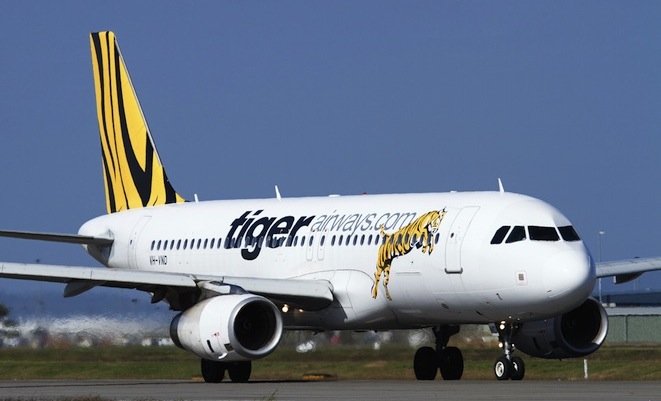
Tigerair's Q1 losses climb to $33m


Losses at Tigerair for the three months to June 30 more than doubled to about $33 million compared with the same quarter last year, dragged down by the performance of its associates in Indonesia and the Philippines as well as higher expenses.

This was despite the group reporting a much narrower operating loss from $11.8 million to $6.2 million during the quarter. Overall turnover grew 30 per cent to $236.2 million, as Tigerair carried more passengers in its key Singapore and Australian markets, the group said yesterday.

The airline comprises Tigerair Singapore and Tigerair Australia, and associates Tigerair Mandala (Indonesia) and Tigerair Philippines.

Group chief executive officer Koay Peng Yen said the improvement in operating performance was due to the Singapore and Australian markets recording "significant increases in traffic volume in spite of a traditionally weak quarter for the air travel industry".

Total spending rose for the first quarter by 25.5 per cent to $242.4 million. During the quarter, Tigerair flew close to two million passengers, or a 36 per cent increase from a year ago.

The pick-up in Australia was significant given the big hit the airline took in July 2011 when the Australian civil aviation authority grounded all its planes over safety concerns. Since then, Tigerair has restructured its Australian business and recently sold a 60 per cent stake to Virgin Australia.

Going forward, the airline will continue to expand its business in South-east Asia with new aircraft and new destinations flown from Singapore, Indonesia and the Philippines, Mr Koay said during a media teleconference yesterday after the numbers were released.

In Indonesia, the group will continue to build its market presence while the Philippine arm will focus on growth in potential markets such as China.

To grow market share and boost shareholder value, the group recently unveiled a new brand and look - ditching its leaping tiger icon and changing its name from Tiger Airways to Tigerair.

Mr Koay said: "The recent brand refresh marks a significant milestone." The new Tigerair will continue to invest in new initiatives to make travel "a stress-free affair" for customers, he said.

SOURCE


Thursday, July 25, 2013

Singapore Airlines Q1 net profit up 56%


Singapore Airlines (SIA) said Thursday its net profit in the first financial quarter rose 56 percent from the year before, mainly due to one time gains.

Net profit of S$122 million (US$96 million) in the April-June period was driven largely by proceeds from the sale of surplus aircraft and gains after it sold its stake in Virgin Atlantic to Delta Air Lines, SIA said in a statement.

Revenue climbed 1.7 percent to S$3.84 billion.

The Asian carrier received a net gain of S$336 million from the sale of its stake in Virgin Atlantic to the US carrier.

However, SIA said also suffered a "restructuring impairment cost" totalling S$293 million on four surplus freighter aircraft it removed from the operating fleet and marked for sale.

"The group's operating environment continues to be impacted by the uncertain global economic climate and high fuel prices," the airline said, commenting on the market outlook.

Forward passenger bookings are likely to be higher in the next few months but "yields are expected to be weaker as a result of the intense competitive environment".

Cargo demand is also forecast to "remain depressed", SIA said.

SIA is facing stiff rivalry from Middle Eastern and other Asian carriers as well as from budget airlines which have grown in number in Asia.

SIA reported a net profit in the year ending March of S$379 million, up 12.8 percent, boosted by surplus from the sale of aircraft, spares and spare engines.

Shares of SIA fell 0.58 percent to close at S$10.25 Thursday before the results were released.

SOURCE


Tigerair launches MPL program with CAE Oxford


The Tigerair Group has entered an arrangement with CAE Oxford Aviation Academy (OAA) to offer training for multi-crew pilot licences (MPL) in Melbourne and Singapore.

Under the agreement, the OAA will train new A320 first officers for the Singapore-based carrier in a competency-based MPL program to be conducted at training locations in Singapore and Melbourne. Following a joint CAE Oxford Aviation Academy and Tigerair assessment and selection process, an initial group of 10 cadets will enrol in the MPL program later this year.

In support of this program as well as other regional programs, CAE OAA plans to open an ab initio ground school training location within CAE’s new training centre in Singapore.

Following the delivery of the ground school training phase in Singapore, the Tigerair cadets will undertake the core and basic phases of flight training at CAE Oxford Aviation Academy’s flight school in Melbourne before returning to Singapore to complete the intermediate and advanced phases of the training on CAE’s A320 full flight simulator.

“Tigerair’s growth requires a steady supply of highly qualified and well-trained pilots. We look forward to partnering with CAE Oxford Aviation Academy, which offers the world’s premier MPL training curriculum, to produce the next generation of pilots,” said Ho Yuen Sang, managing director of Tigerair.

SOURCE


Details of Changi East developments out soon


Details of developments at Changi East will be made known to the public soon.

Some developments in the works include a mega-passenger terminal to cater to more passengers and a third runway for Changi Airport.

Minister of State for Finance and Transport, Mrs Josephine Teo, said the inter-agency Changi 2036 Steering Committee, has completed "a major part of its work".

Mrs Teo was speaking on the sidelines of the third Aviation Open House on Thursday morning.

The Changi 2036 Steering Committee is tasked with looking into Changi airport's future needs, including the masterplan for development at Changi East.

The work includes the scale and timeline of the development.

Channel NewsAsia understood details will likely be shared around the period when the National Day Rally speech is delivered.

Mrs Teo elaborated: "We have to study many things because it is not just building a terminal or just getting the runway ready. There are also things we have to consider, like the future availability of land, space for logistics players. Once you have logistics there, for the convenience of passengers, we have to think through vehicular access. Vehicular access is itself a very serious study. That part is more or less completed. We have arrived at some decisions."

To complement such developments, talent is key.

Mrs Teo said: "Today, the industry provides more than 50,000 core aviation jobs. There is already a wide spectrum of career options open to Singaporeans from diverse backgrounds. Given the plans we have set in motion for the development of Changi East, it is quite clear that Singapore Aviation will provide many more quality jobs in the future that will challenge the best of minds and those with passion."

The biennial Aviation Open House brings together more than 45 aviation-related organisations and educational institutions.

Divesh Singaraju, an aerospace engineering student at Singapore Polytechnic, said: "I was four years old when I took a plane to US with my parents. And from then on, my parents always said I would be very amazed by the way the plane flies. That really diverted me towards planes, but I was not sure whether to be a pilot or an engineer. As time went by, I realised that I was more of a hands-on guy so I went towards the engineering path."

Companies hope to attract aviation enthusiasts like Divesh to work in the sector.

Robert Mazurkivich, general manager of global services engineering (Asia) at Pratt & Whitney, said: "We typically recruit in Singapore at the major universities. We also would like to embellish the relationship with the polytechnics here and get in the ground floor and start to build relationship in the first and second year of schools.

"We have a lot of cyclical business and we also recruit for hiring needs to staff our current needs as well as our growing businesses. Some of the recruiting challenges we face today are finding skilled professionals in mechanical and aerospace engineering."

More than 8,000 visitors are expected at the event. As part of the three-day event, there will be a recruitment exercise on July 26.

Over 300 pre-selected job seekers will be interviewed by eight aviation organisations.

Collectively, these organisations have more than 200 job vacancies.

SOURCE


Tuesday, July 23, 2013

Major delays at LaGuardia after Southwest plane's landing mishap


The front landing gear of a flight arriving at New York's LaGuardia Airport collapsed Monday right after the plane touched down on the runway, officials said, sending the aircraft skidding before it came to a halt.

Ten passengers were treated at the scene, with six being taken to a hospital with minor injuries, said Thomas Bosco, Acting Director of Aviation for the Port Authority of New York and New Jersey, which oversees the area airports. The six crew members were taken to another hospital for observation.

Dallas-based Southwest said there were 150 people on Flight 345 coming from Nashville, Tennessee, while the Port Authority said the total was 149.

Bosco said the nose gear of the plane collapsed when it landed at 5:40 p.m., and "the aircraft skidded down the runway on its nose and then veered off and came to rest in the grass area."

Bosco said there was no advance warning of any possible problem before the landing.

Emergency crews were seen spraying foam toward the front end of the Boeing 737-700 on the tarmac. The Port Authority said the passengers exited the plane by using emergency chutes.

The airport was temporarily closed, but one of two runways was operating shortly after 7 p.m. CBS New York reports dozens of departing flights have been canceled or delayed across the board. Passengers from various airlines were forced to rebook.
Bosco said the Port Authority was hoping to have the airport fully open by Tuesday morning.

The Federal Aviation Administration is investigating, as is the National Transportation Safety Board.

Richard Strauss, who was on a nearby plane waiting to take off for Washington, said the nose of the plane was "completely down on the ground. It's something that I've never seen before. It's bizarre."

A rear stairwell or slide could be seen extending from the Southwest aircraft, said Strauss, who owns a Washington public relations firm. His plane, which was about 100 yards (90 meters) from the Southwest flight, wasn't allowed to taxi back to the gate, he said.

Debbie Marsella told CBS New York her daughter was on the plane.

"It actually got where you could feel the heat inside the cabin, and the doors flung open, and the chutes came out," said Marsella, of Milford, Conn.

Marsella said she got a call that something went wrong. "She was like, 'Mom, the plane crashed, but we are OK,'" she said.

Bobby Abtahi, an attorney trying to catch a flight to Dallas, was watching from the terminal and heard a crowd reacting to the accident.

"I heard some people gasp and scream. I looked over and saw sparks flying at the front of the plane," he said.

The incident came 16 days after Asiana Flight 214 crash-landed at San Francisco's international airport on July 6, killing two Chinese teenagers; a third was killed when a fire truck ran over her while responding to the crash, authorities said. Dozens of people were injured in that landing, which involved a Boeing 777 flying from South Korea.

Longtime pilot Patrick Smith, author of "Cockpit Confidential: Everything You Need to Know About Air Travel. Questions, Answers, and Reflections" and AskthePilot.com, said landing gear incidents are not high on the list of worries for pilots.

"It doesn't happen very often but I need to emphasize just how comparatively minor this is and how far, far down the hierarchy it is," he said. From a pilot's perspective, this is nearly a non-issue. They make for good television, but this is far down the list of nightmares for pilots."

SOURCE


Ryanair offers to sell Aer Lingus stake


Greater London: Irish no-frills airline Ryanair on Tuesday said it was prepared to sell its minority holding in rival Aer Lingus to address "unfounded" British regulatory concerns.

Britain's Competition Commission watchdog in May called on Ryanair to cut its 29-per cent holding, arguing that the stake risked reducing competition on routes between Britain and Ireland.

Ryanair responded on Tuesday with as strongly-worded statement, in which it said it was willing to see if any airline would indeed be prepared to take over Aer Lingus, which it clearly doubted.

Ryanair's own attempts to buy out its competitor have repeatedly been blocked by the European Commission on grounds of competition, although the Brussels has not called upon Ryanair to sell its minority stake.

The situation changed in May however when the commission argued that Ryanair's stake gives it the ability to influence the commercial strategy of Aer Lingus.

It said also that against a background of consolidation in the airline industry, Ryanair's shareholding obstructs Aer Lingus's ability to merge or combine with another airline.

Ryanair spokesman Robin Kiely described the watchdog's concerns as "imaginary", "non-existent" and "bogus".

He added in the statement: "The only remaining 'concern' they can now dream up is that Ryanair's 29 per cent stake might prevent another EU airline buying Aer Lingus; despite 6.5 years of evidence... that no other EU airline has any interest in acquiring Aer Lingus."

The European Commission, the EU's executive arm, had in February barred Ryanair's third attempt since 2007 to take over Aer Lingus, citing concerns passengers would lose out badly.

Aer Lingus in any case snubbed all of Ryanair's takeover attempts, arguing that it is a strong stand-alone airline. The Irish government owns around 25 per cent of Aer Lingus and has refused to sell its stake to Ryanair.

SOURCE


Saturday, July 20, 2013

Firefighters caused death of Asiana crash victim: coroner


One of the victims of this month's Asiana Airlines jet crash in San Francisco survived impact but was killed on the tarmac when she was run over by an emergency vehicle, officials said on Friday.

Results of the autopsy on 16-year-old Chinese student Ye Mengyuan, one of three people killed in the July 6 disaster, had been keenly awaited after firefighters admitted a tarmac accident was possible.

The girl, who was "alive at the time," died due to "multiple blunt injuries that are consistent with being run over by a motor vehicle," San Mateo county coroner Robert Foucrault told reporters.

San Francisco fire chief Joanne Hayes-White offered her "condolences and apologies to the family... in light of the coroner's findings in this tragic accident."

"Obviously this is very difficult news for us -- we're heartbroken," Hayes-White said. "We're in the business of saving lives."

The city fire chief said the entire emergency operation was still under review.

"I continue to be very proud of all the men and women of our department. Many of our members risked their lives to save passengers and crews that day," she said, lamenting the "tragic accident."

A police inquiry found that Ye was hidden under a layer of white foam, used by firefighters as a flame retardant in the wake of the crash upon landing of Asiana Flight 214.

Hayes-White said the vehicle involved was likely "one of the specialized rigs at the airport," adding: "There were many surrounding the aircraft."

She said fire department personnel were cooperating with both a police probe and the one led by the US National Transportation Safety Board.

The two other people killed in the crash were also female Chinese youths.

More than 180 others injured in the crash of the Boeing 777, which had left Shanghai and made a stop in Seoul before heading to San Francisco.

Two of them were still in critical condition on Friday, with "spinal cord injury, abdominal injuries, internal bleeding, road rash and fractures," San Francisco General Hospital said in an update.

The passenger jet had 307 people on board, including 16 crew members. More than 120 people escaped unharmed.

The crash was the carrier's first passenger jet crash in 20 years.

According to preliminary findings from the NTSB, the plane crashed because it was flying too low and too slowly as it approached the runway.

The tail of the aircraft broke off as the plane clipped a seawall short of the runway, skidding out of control and quickly catching fire.

It has also emerged that the otherwise experienced pilot was undergoing his first major training on the Boeing 777, and it was his co-pilot's first time working as instructor.

Asiana has argued the pair were "competent" veterans with around 10,000 flying hours including dozens of flights to San Francisco.

Officials in South Korea have said that Asiana, the country's number two airline, will be subject to a weeks-long government investigation.

SOURCE

Not a nice thing to know when your motto is to save lives yet you caused the death of a young life. The white foam didn't help matters and in the chaotic scene after the crash, such an incident is unfortunate, my condolences to the girl's family.