Thursday, August 4, 2016

Cathay Pacific Direct Entry First Officer


Direct Entry First Officer – A330 & B747 Hong Kong based

Experienced and technically proficient pilots are required to meet the following minimum requirements:
  • ICAO Airline Transport Pilot Licence (ATPL) – obtained without exemption or conversion
  • Valid Multi-Engine Instrument Rating
  • Valid Class 1 Medical Certificate
  • ICAO English Level 4 or above
  • Experience commensurate with age

Minimum flight time experience:
1000 hours flying experience in one, or a combination of the following:

  • Multi-engine jet transport as Commander or First Officer
  • Military high performance jet
  • Turbo propeller aircraft of weight 20,000KG or more (command)
  • Corporate jet (command)
  • Military instruction (fixed wing)

Preference will be given to applicants with the following flight time experience:
A minimum of 500 hours in Airline or Military Jet Transport aircraft with a certified Maximum All Up Weight (MAUW) equal to or greater than 45,000KG.

The total hour requirement may be reduced for Airbus or Boeing type rated individuals, with time on type.

Direct Entry First Officer training will be conducted in the Cathay Pacific Flight Training Centre in Hong Kong.


Wednesday, February 3, 2016

British Airways Direct Entry Pilot - A320


Job DescriptionClosing Date: 21 February 2016
The Direct Entry Pilot Scheme is for experienced high calibre pilots who want to develop their careers with one of the most progressive international airlines in the business.

The Individual

Requirements for all pilots:
  • A current JAR-FCL or EASA Flight Crew Licence with Class 1 medical to apply (when you join British Airways you must hold a UK issued EASA Flight Crew Licence)
  • ICAO Level 6 proficiency in English language
  • A valid passport (with minimum of 12 months before expiry date) allowing unrestricted worldwide travel
  • The unrestricted right to live and work in the UK
  • To be considered for our current vacancies you will need:
  • To hold a current A320 type rating with 500 hours on type
  • Successful candidates will be entered into our hold pool, from which an offer onto either the Gatwick or Heathrow based A320 series fleets may be made

As a Person, you will
  • You will need a first class flying record and a good level of physical fitness, and will be able to satisfy British Airways' medical requirements
  • Your height will be between1.57m (5'2") and 1.91m (6'3") with weight in proportion to height (height is accurately determined during the assessment process). Qualified pilots who are taller than 1.91m may submit an application but will be required to undergo a functionality check to confirm their ability to meet the requirements of the seating positions in the British Airways fleet of aircraft
  • You will be passionate about a career as a pilot with British Airways. While there are opportunities to move fleets with British Airways, initial fleet postings normally last a minimum of five years
  • You will already be comfortable with taking control of your own learning and professional development, and both willing and able to self-study, read widely, and continue to develop as a safety conscious professional pilot for the duration of your flying career
  • You will be comfortable flying a busy schedule, with BA flights operating 365 days a year You will be comfortable working with colleagues and customers from all cultures and nationalities, and able to identify, and work, with cultural differences
  • Finally, you will have a genuine enthusiasm for our customers, and finding ways to exceed their expectations when they fly with us. You will be able to put our customers' needs at the heart of your decision making, and will be comfortable dealing with our customers face to face both when things are going to plan, but also when they're not

Application ProcessAll applicants are required to submit their CV and answer the following question. Please prepare your answer in advance: 

1. In 600 words or less, please answer the following:
  • Describe your reasons behind applying to become a pilot with British Airways?
  • What can you bring to our organisation and customers to assist British Airways in meeting the operational and business challenges of the commercial aviation market?
2. What do you believe constitutes effective leadership on the flight deck? In the past, how have you demonstrated these skills and qualities? (Max 300 Words)

3. Describe a situation in which you exceeded your customers' expectations. (Max 300 Words)


Please note the following information if you have made a previous application to us. We cannot accept a new application within:

6 Months if you were unsuccessful at initial application screening
12 months if you were unsuccessful at any stage of testing/interview/simulator assessment. You are welcome to reapply 12 months from the date you attended initial aptitude testing


Friday, January 29, 2016

United Airlines to launch nonstop flight between Singapore and San Francisco


United Airlines will introduce daily nonstop flights between Singapore’s Changi Airport and its San Francisco International Airport hub, it announced on Friday (Jan 29).

This will be the first nonstop service between Singapore and San Francisco and the only one to the US from Singapore. The Boeing 787-9 aircraft will be used for this nonstop service, it added.

Flying times will be approximately 15 hours, 30 minutes eastbound and 16 hours, 20 minutes westbound, saving customers up to four hours' journey time each way from previously available flights, the airline said.

Eastbound flights, which will start on Jun 3 subject to government approval, will depart Changi Airport at 8.45am daily, arriving at San Francisco International Airport at 9.15am the same day.

The westbound return flight will depart San Francisco at 11.25pm daily, arriving in Singapore at 6.45am two days later.

Vice President of Atlantic and Pacific Sales Marcel Fuchs said the new service will offer "unique benefits to customers travelling from Singapore not only to San Francisco but also to dozens of other cities across the Americas via our San Francisco hub".

The airline has timed the new flights to connect with destinations throughout the US, Canada and Latin America at San Francisco, providing a one-stop service between Singapore and more than 40 US cities. These 40 cities include more than 25 that do not currently have one-stop services from Singapore, it said.

With the launch of the nonstop Singapore-San Francisco service, United will terminate services between Singapore and Tokyo's Narita Airport from Jun 2. However, it will maintain its daily service between Singapore and Hong Kong.


Sunday, January 24, 2016

Qatar Airways Pilot Recruitment Road Show


Qatar Airways recruitment events are coming to Johannesburg and Singapore, and we are searching for talented individuals to join our award-winning team. We take pride in our people a dynamic and culturally diverse workforce is essential to ensuring we are one of the world’s premium and fastest-growing airlines.

Given our current growth, we are looking for Captains, and First Officers across our young Boeing and Airbus fleet.

If you are an experienced pilot, and interested in hearing more about Qatar Airways, or keen to join our 5-star team, please come along to our information session and meet with our pilot recruitment team.


Johannesburg, South Africa 
The Holiday Inn Sandton HOTEL
123 Rivonia Rd, Sandton, 2148, South Africa 

Flight Deck Presentation
2nd -3rd February 2016 

At 10:00 and 13:00 


Singapore, Singapore 
Ramada Singapore At Zhongshan Park
16 At Hood Road, Singapore 329982

Flight Deck Presentation
7th - 8th March 2016

At 10:00 and 13:00


Friday, January 22, 2016

Tiger Airways continues recovery with higher Q3 net profit


Budget carrier Tiger Airways on Friday (Jan 22) posted a net profit of S$6.8 million for the three months to Dec 31, 2015, in a sign that business is turning around.

The net profit for the fiscal third quarter was a marked improvement over the S$2.2 million earned a year ago. It also marked a reversal of the S$12.8 million net loss reported for the second quarter ended Sep 30.

Tigerair's revenue for the quarter rose 1.5 per cent to S$187.4 million, while its fuel costs fell by a third to S$43.5 million.

Commenting on its prospects, Tigerair said economic conditions remain uncertain. Surplus capacity in the industry will continue to exert downward pressure on yields in the near term, it added.

The budget carrier also said, however, that low fuel prices offered some respite. Tigerair is current the subject of a takeover bid by majority shareholder Singapore Airlines, which wants to take the budget carrier private.


Boeing cuts 747-8 production as air freight slows


Boeing said on Thursday (Jan 21) it would cut back production of its freight workhorse 747-8 aircraft by half as the air cargo industry slows.

Boeing said it could move from completing one 747-8 per month to one every two months from September.

The company said data in November showed air freight had contracted by 1.2 per cent over a year, even as air passenger volumes grew 5.9 per cent.

"We are closely monitoring the air cargo market as we work to win additional orders to support ongoing future production," said Boeing chief financial officer Greg Smith.

Boeing will take a US$569 million charge against after-tax earnings for the fourth quarter of 2015 for the production cut. Earnings will be reported on Jan 27.

SOURCE


Wednesday, January 20, 2016

Singapore Airlines introduces new services to Canberra, Wellington


National carrier Singapore Airlines will operate a new route, called the "Capital Express", to Australia's Canberra and New Zealand's Wellington, it announced in a news release on Wednesday (Jan 20).

Subject to regulatory approvals, flights will operate four times per week from Sep 20 on a Singapore-Canberra-Wellington route, with return flights on a Wellington-Canberra-Singapore route, it said.


Route timings for the new route based on a launch date of Sep 20, 2016. (Table: Singapore Airlines)


Flights along the new route will be operated with the 266-seat retrofitted Boeing 777-200s fitted with 38 Business Class seats and 228 Economy Class seats, it added in the release.

Singapore Airlines said with the launch of Capital Express, it will be the first airline with flights between Canberra and Wellington, as well as the first to operate regularly scheduled international services to and from Canberra.

“This new service linking Singapore, Canberra and Wellington reflects the close ties between the three countries,” said Singapore Airlines CEO Goh Choon Phong.

Flights will be available for booking through the Singapore Airlines website, call centres and travel agents in the coming weeks, the company said.


Tuesday, January 19, 2016

Airlines to enjoy low fuel in 2016, costs under spotlight


Airlines can look forward to continuing low oil prices for at least this year, helping to boost profits and drive demand for travel, but need to be wary of a swift rebound and focus on staff costs, experts said at a conference on Monday.

Low oil brings non-fuel costs at airlines into the spotlight, and highlights the difference between legacy carriers such as Lufthansa and Air France-KLM and low-cost airlines like Ryanair, analysts said.

Oil prices hit their lowest since 2003 on Monday, as the market braced for additional Iranian exports after sanctions against the country were lifted over the weekend.

Mike Corley, head of Mercatus Energy Advisors, said at the Airline Economics conference in Dublin he would not be surprised to see oil prices drop by another US$5-US$10 a barrel, but cautioned that prices could bounce back quicker than people expect.

IAG CEO Willie Walsh, lauded for cost-cutting at British Airways and Iberia, said the group would continue to focus on costs in 2016 and labor would probably be the biggest part of its cost base this year as fuel comes down.

"We compete with the likes of Ryanair, the most aggressive low-cost airline in Europe. We've got to have a cost base that enables us to compete in an effective manner," he said, highlighting a decision to move some office jobs to Krakow, Poland.

Jozsef Varadi, CEO of low-cost carrier Wizz Air , said only 8 percent of costs at the eastern European carrier were staff costs but it too had to keep cutting because labor costs would otherwise creep up with inflation.

"Others run campaigns for reducing costs but that's how we do business," he told Reuters, adding the carrier was nearing Ryanair in terms of its cost base.

Low prices are also prompting more airlines to look into their fuel hedging strategies, with some wanting to hedge and others scaling back existing programs, Mercatus' Corley said.

U.S. airlines are typically much less hedged than their European counterparts.

United Airlines used to hedge around 30-40 percent of its annual fuel needs but that is down at around 15 percent for the current year, Ted North, managing director corporate finance, said.

However, low oil prices were not expected to result in airlines cancelling orders for new fuel-efficient planes, developed when the oil price was high, Peter Morris, chief economist at Ascend, said.

"The oil price has gone down, but the added benefit is someone has brought a whole new range of toys to play with," he said.


Wednesday, July 15, 2015

Scoot's Cadet Programme

B777-200ER


Embark on a flying career with a vibrant and fun airline! Take off to an exciting career with Scoot Cadet Pilot Programme!

Scoot is NOT your usual airline. We are 'Scoot' for many reasons, not least because we're different. Our brand conveys spontaneity, movement, informality and a touch of quirkiness - all attributes we are well known to be associated with. These attributes will be personified in a unique spirit that encapsulates our values and style. An airline with a different attitude, surrounded by people with 'Scootitude'.

Scoot is partnering the renowned aviation school, Singapore Flying College (SFC) to develop the Scoot Cadet Programme to fill our cadet vacancies. Our cadets will undergo a customised self-funded 18 months training course at SFC. Completion of the course equips you with a Commercial Pilot Licence (Instrument Rating) or 'Frozen' ICAO ATPL. Now, you are one step closer to becoming a Second Officer!

Upon graduation from SFC, you will undertake Scoot's Multi- Crew Coordination, type, base and line training to ensure you are fully equipped with the essential skills and knowledge to fly Scoot's latest wide-body aircraft - the Boeing 787 Dreamliner.

So if you have the passion for aviation and the 'Scootitude' DNA in you, we welcome you to journey with us and progress on to fulfilling your aspiration to be a pilot!


Essential Requirements


  • Minimally 18 years old (as required by regulations in Air Navigation Order)
  • Legally entitled to work in Singapore upon completion of training
  • GCE 'A' level, Polytechnic Diploma or Degree. A minimum of 5 Credits in the GCE 'O' level or its equivalent at one sitting. These must include English, Mathematics and a Science subject, preferably Physics.
  • Physically and mentally fit
  • Qualify for Class 1 unrestricted medical certification as approved by the Civil Aviation Medical Board (CAMB)
  • Good visual acuity of at least 6/60 without optical aid, correctable to 6/6 and not colour blind
  • Be able to commit to a period of 18 months of consecutive training with no disruption


Desirable Traits


  • A keen learner with a strong passion for aviation
  • A team player who demonstrates composure, confidence and maturity
  • A sense of humour to brighten up the day of everyone around you
  • Definitely the 'Scootitude' DNA in you!


What's next?

Submit your interest with us by clicking the "Apply now" icon
More details on Scoot Cadet Pilot Roadshow and the application process will be communicated to shortlisted candidates by 23 July 2015.

SOURCE


Sunday, June 7, 2015

Singapore Weather & Updates

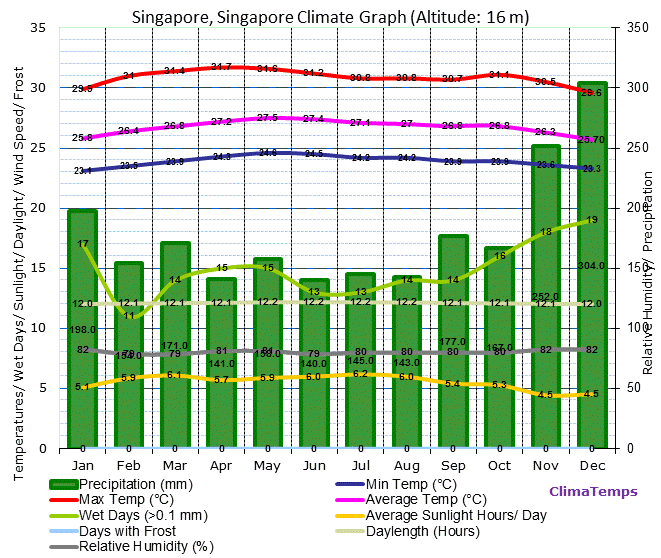
The Singapore (Paya Lebar) climate is characterised by uniform temperature and pressure, high humidity and abundant rainfall. The climate of Singapore can be divided into two main
seasons, the Northeast Monsoon and the Southwest Monsoon season, separated by two
relatively short inter-monsoon periods.

North-East Monsoon Season - December to early March - Northeast winds prevail,
sometimes reaching 20 km/h. Cloudy conditions in December and January with frequent
afternoon showers. Spells of widespread moderate to heavy rain occur, lasting from 1 to 3
days at a stretch. Relatively drier in February till early March. Also generally windy with wind speeds sometimes reaching 30 to 40 km/h in the months of January and February.

Pre South-West Monsoon - late March to May - Light and variable winds with afternoon and early evening showers often with thunder.

South-West Monsoon Season - June to September - Southeast/Southwest Winds. Isolated to scattered late morning and early afternoon showers. Early morning 'Sumatra' line squalls are common. Hazy periods.

Pre North-East Monsoon - October to November - Light and variable winds. Sea breezes in the afternoon. Scattered showers with thunder in the late afternoon and early evening.

Temperatures range from 19.4 deg C to 35.8 deg C. There is no distinct wet or dry season. Rainfall maximum occur in December and April. The drier months are usually in February and July.


=======================================================

Apologies for going missing for an extended period of time as I was swamped with materials to study as well as a hectic training schedule. Managed to clear CAAS Form 32 and Base Check, with the next stage being Base Training with the airline. The pace at which things went in the past six weeks was amazing and everything went by in a blink of an eye.

I'll try to keep up with the backdated posts and update this post with the links below.


Backdated Posts:-


Wednesday, April 22, 2015

New pilot school boosts Singapore's hub status


A NEW pilot school has opened near Changi Airport, boosting Singapore's status as a key training centre in a region where there is growing demand for cockpit crew.

Housed in a six-storey facility at Changi Business Park Crescent, the $95 million Haite Singapore Aviation Training Centre is owned by China-based aerospace firm Haite Group.

Catering mainly to airlines in South-east Asia, it has two flight simulators and aims to add five more over the next five years. With seven simulators, it will be able to provide about 50,000 training hours a year.

Haite Singapore managing director Marc Nadeau expects to secure its first airline customer over the next few days but declined to say which one.

It is the group's first such facility outside China where it currently trains more than 2,000 pilots and flight crew each year for airlines such as Air China, China Eastern and Philippine Airlines.

With airlines buying more aircraft, it is estimated that more than half a million new pilots will be needed globally in the next 20 years.

Four in 10 are expected to be hired by Asian carriers.

Singapore Technologies (ST) Aerospace also has a pilot training arm and in the first quarter of next year, Singapore Airlines and aircraft manufacturer Airbus will open their new pilot school at Seletar Aerospace Park.

Mr Nadeau said: "We have some very big players in the region but each player has its own particular role. We are addressing not just the commercial aviation market but also business aviation and the helicopter segment. This is where we distinguish ourselves. We address all aircraft types and all aircraft segments."

Speaking at the official opening of the facility yesterday, Senior Minister of State for Transport Josephine Teo said Haite is a welcome addition to Singapore's aviation industry, which has more than 100 companies offering a full suite of services, such as aircraft maintenance and repair, parts distribution, and aircraft leasing.

Ms Teo said the firm's presence here "is a testament to Singapore's importance as an aerospace hub for the region and an excellent example of how we can partner Chinese companies to facilitate their international expansion, especially into the growing South- east Asian market".

SOURCE


Friday, April 17, 2015

Batik Air flight makes emergency landing in Indonesia, no bomb found


An Indonesian Batik Air flight with 122 people on board made an emergency landing in Makassar in South Sulawesi after a suspected bomb threat, a government official said on Friday.

No bomb was found on the plane.

"I got a call from Sultan Hasanuddin airport in Makassar giving information about a bomb on Batik Air flight flying from Ambon to Jakarta," said J.A. Barata, spokesman for the transport ministry.

"Details on how they found out is unclear yet, I'm still waiting for information. The police is in charge of that now."

The plane was isolated from other flights and airport operations were not affected, said Tommy Soetomo, chief executive of airport operator Ankasara Pura I.

Batik Air is a subsidiary of Indonesian budget carrier Lion Air.


Thursday, April 16, 2015

Scoot to launch flights between Singapore and Kaohsiung


Scoot will launch flights between Singapore and the Taiwanese city of Kaohsiung from Jul 9 this year, the budget airline announced on Thursday (Apr 16).

The airline’s Boeing 787 Dreamliner aircraft will operate the thrice-weekly flights, said Scoot in a news release.

The Singapore-Kaohsiung flight will depart at 7:55am on Tuesdays, Thursdays and Saturdays from Jul 9. Meanwhile, the flight from Kaohsiung to Singapore will depart at 9:30pm on Tuesdays, Thursdays and Saturdays from Jul 9.

Scoot currently operates daily flights between Singapore and Taipei.


The jumbo jet faces a make or break year at Boeing, Airbus


The jumbo jet, for many years the workhorse of modern air travel, could be close to running out of runway.

Last year, there were zero orders placed by commercial airlines for new Boeing 747s or Airbus A380s, reflecting a fundamental shift in the industry toward smaller, twin-engine planes. Smaller planes cost less to fly than the stately, four-engine jumbos, which can carry as many as 525 passengers.

The slump in sales of the jets has raised questions over how long manufacturers can sustain production. It has also fueled internal debate in both companies over the future of the planes, sources said.

The outcome of those discussions will affect the value of existing fleets and thousands of production jobs at the plane makers and their many parts suppliers.

Sales forces at Airbus Group NV and Boeing Co are fighting for potential orders plane by plane as they seek to keep production going beyond the end of the decade, said other aviation market sources. The aircraft makers are offering discounts of at least 50 percent from catalog prices of around US$400 million for a jumbo jet, those sources said. Airbus has said it is also considering a revamp to make its 'superjumbo' more attractive to buyers.

Boeing in September plans to slow the pace of production of its latest 747-8 model to an average of 1.3 planes a month from 1.5 currently. At that rate the orders it already has in hand will only keep the production line going for 2 1/2 years.

The crunch, though, will come earlier because it can take up to two years from ordering the first part to finishing a jet, and no one wants to start the process if it is unclear whether the plane will be completed and delivered to a customer.

"I can see demand for the 747-8 in small numbers, but you have got to ask if they can keep the production line open if they don't get some new orders," said Tony Whitty, chief executive of UK-based aircraft re-marketing firm Cabot Aviation, which trades, manages and leases jets. "You also wonder at what price they are selling."


LONG DESCENT
Use of the 747 has dropped steadily over the last two decades, reflecting the rise of two-engine jets that have come close to matching its range. Over the same period production of large twin-engined jets like the Boeing 777 has risen seven-fold. Last year, Boeing booked 283 new orders for the 777 and now has a backlog of 547 orders.

Airbus is more upbeat than Boeing about the prospects for jumbo jets but both now agree it has become a niche category. Airlines still need jumbo jets but only for certain polar flights - where a two-engine jet may be less safe than a four-engine jumbo because of the lack of places for an emergency landing - and busy routes where landing slots are scarce.

The risk is most visible for Boeing, where investors could face a US$1 billion accounting charge if 747 production is shut down, according to company disclosures.

Boeing recently received a high-profile boost with a provisional order for two new jets to serve as Air Force One for the U.S. President but the 747's future depends a lot more on sales of the much-less glamorous windowless freight model. That has a unique hinged nose and can carry very large equipment, such as oil drilling rigs.

So far this year, Boeing has sold three. Atlas Air Worldwide recently said it plans to order more for its cargo fleet, but wouldn't say when or how many. The world's biggest 747 freight customer, Cargolux , also says it likes the plane, but has a pending order for only three.

A sustained upturn in air freight traffic could secure the 747 a longer future. International freight traffic rose 4.8 percent last year, but volume has only just recovered from a collapse in 2009 during the financial crisis.


CARGO HAULER
Boeing reckons some 143 older freighters will need to be replaced, stretching demand for the 747 through the 2020s, the program vice president, Bruce Dickinson, said in an interview.

"We know there is a long-term market for this airplane and some of the unique things it can do," Dickinson said from his office overlooking the 747 production line at the giant Everett plant near Seattle.

But Boeing’s effort to sell new 747s is overshadowed by the many older 747s available for lease, which have suddenly been made more attractive because of a big slide in fuel prices since the middle of last year. Leasing companies say there is scant interest in new 747-8s when 82 freighters are baking in desert parking lots.

The older planes can be leased for as little as US$400,000 a month, compared with up to US$1.4 million in monthly lease payments for a new 747-8 freighter, experts say.

"That's a pretty big difference," said Gueric Dechavanne, vice president at Collateral Verifications, a Connecticut-based aircraft appraisal firm.

Some companies have extended 747 leases for three to four years, said Aengus Kelly, chief executive of leasing company AerCap .

"It's a challenge to lease a freighter," Kelly told Reuters. "It's definitely a challenge to sell them."

Airbus’s A380 is a newer plane – its first flight was almost exactly 10 years ago - and has become a mainstay of Middle East carriers that offer opulent suites to first class passengers. But the drop in demand is prompting Airbus to weigh whether to revamp the plane with new engines, or carry on with the existing model.

Airbus has 161 orders for the planes in hand, or more than five years of production. But it acknowledges that not all of those jets will be delivered, leaving it with barely three years of guaranteed output. Given the long lead times, Airbus must bring in more orders soon to avoid having to taper production.

“We are always looking at product improvements, but there is so much untapped potential in the existing aircraft,” said Airbus marketing head Chris Emerson.

Airbus could announce an A380 revamp as early as the Dubai Airshow in November, but must first find a way to assure investors it can recover several billion dollars of development costs, sources said. Analysts say on option could be to apply for more European government loans, though that risk

s exacerbating trade tensions with the United States.

Top customer Emirates is offering to double its planned purchase of 140 A380s if Airbus carries out the improvements, which the Dubai carrier’s Chief Executive Tim Clark tells Reuters will be "extremely good for the (airline’s) bottom line."

But Airbus’s board is unlikely to back a new A380 model for just one customer.


Wednesday, April 15, 2015

Asiana Airways plane hits antenna as it lands at Japan airport


An Asiana Airways plane smashed into a communications antenna as it came in to land at a Japanese airport, footage showed Wednesday, injuring 27 people in an accident redolent of the airline's fatal 2013 crash in San Francisco.

Aerial footage from Hiroshima airport in western Japan showed the localiser - a large gate-like structure, six metres (18 feet) high that sits some distance from the start of the runway - splintered, with debris spread towards the landing strip.

Sets of wheelmarks were visible on the grass area in front of the runway, while at least one large fragment of the localiser - which aircraft use to find the landing strip - was on the tarmac.

Several hundred metres away, skid marks showed the Airbus A320 had careered off the runway and rotated more than 90 degrees. What appeared to be a chunk of the localiser was seen dangling from one wing and emergency escape chutes were deployed.

Those on board flight OZ162 from Incheon, near Seoul, to Hiroshima, spoke of terror and confusion.

"There was smoke coming out and some of the oxygen masks fell down. Cabin attendants were in such a panic and I thought 'we are going to die'," a woman told Japanese networks late Tuesday.

All 73 passengers and eight crew members had evacuated, and no one was killed, but 25 passengers and two crew members had been injured, Japanese officials said.

An aviation safety official at the transport ministry in Tokyo told AFP that teams of investigators were on their way.

"The left side of the aircraft's horizontal tail was damaged... but how the accident occurred should be determined as the transport safety board carry out their investigation," he said.

The South Korean carrier said 18 passengers - 14 Japanese, two Koreans and two Chinese - had been hurt. Only one of them had to stay overnight in hospital. There was no explanation for the discrepancy between Asiana and the Japanese authorities.

"Asiana Airlines apologises for causing concern to the passengers and the people over the accident," it said in a press statement.

"Asiana Airlines has immediately set up a response team to cope with the aftermath.

"As to the determination of the cause of the accident, we will co-operate as closely as possible with the relevant authorities." An Asiana spokeswoman told AFP in Seoul it was checking Japanese news reports that the flight was approaching the runway at a lower altitude than normal before it grazed the communications tower near the runway.

Tuesday's accident carries echoes of an Asiana flight that crashed in San Francisco in July, 2013, killing three people and leaving 182 injured.

US investigators concluded that a mismanaged approach for landing in a highly automated cockpit was the probable cause of the accident, in which a Boeing 777 clipped a sea wall with its landing gear, then crashed and burst into flames.

The South Korean Transport ministry ordered a 45-day suspension of Asiana Airlines' service to San Francisco as a penalty.


Saturday, April 11, 2015

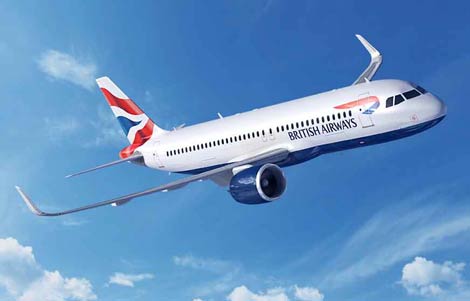
British Airways First Officer


Job Description
Closing Date: 10 May 2015


The Direct Entry Pilot Scheme is for experienced high calibre pilots who want to develop their careers with one of the most progressive international airlines in the business.


The Individual
Requirements for all pilots:


A current JAR-FCL or EASA Flight Crew Licence with Class 1 medical (please note: due to CAA rules you will need a UK issued EASA licence when you join British Airways)
ICAO Level 6 proficiency in English language
A valid passport (with minimum of 12 months before expiry date) allowing unrestricted worldwide travel
The unrestricted right to live and work in the UK


To be considered for our current vacancies you will need:
To hold a current type rating and a minimum of 500 hours, or the required sectors, on an aircraft that satisfies CAP 804 FCL.730.A - Zero Flight Time Training course requirement. We would be particularly interested in hearing from candidates operating the A320/A350/747/757/767/777/787
Candidates applying from BA CityFlyer should apply through the internal eJobscan system (Please note: If you are currently a British Airways CityFlyer employee, please advise your line manager of your application, to ensure eligibility for this role)
You will be passionate about a career as a pilot with British Airways. The majority of postings will be as an A320 First Officer based at London Heathrow. While there are opportunities to move fleets with British Airways, initial fleet postings normally last a minimum of five years


As a Person, you will
Have a first class flying record and a good level of physical fitness, and will be able to satisfy British Airways' medical requirements
Be between1.57m (5'2") and 1.91m (6'3") in height with weight in proportion to height (height is accurately determined during the assessment process). Qualified pilots who are taller than 1.91m may submit an application but will be required to undergo a functionality check to confirm their ability to meet the requirements of the seating positions in the British Airways fleet of aircraft
Be passionate about a career as a pilot with British Airways, and interested in accepting a first posting as an A320 First Officer at either London Heathrow or London Gatwick. While there are opportunities to move fleets with British Airways, initial fleet postings normally last a minimum of five years
Already be comfortable with taking control of your own learning and professional development, and both willing and able to self-study, read widely, and continue to develop as a safety conscious professional pilot for the duration of your flying career You will be comfortable flying a busy schedule, with BA flights operating 365 days a year
Be comfortable working with colleagues and customers from all cultures and nationalities, and able to identify, and work, with cultural differences
A genuine enthusiasm for our customers, and finding ways to exceed their expectations when they fly with us
Be able to put our customers' needs at the heart of your decision making, and will be comfortable dealing with our customers face to face both when things are going to plan, but also when they're not


Application ProcessAll applicants are required to submit their CV and answer the following question. Please prepare your answer in advance:
In 600 words or less, please answer the following:
Describe your reasons behind applying to become a pilot with British Airways?
What can you bring to our organisation and customers to assist British Airways in meeting the operational and business challenges of the commercial aviation market?
What do you believe constitutes effective leadership on the flight deck? In the past, how have you demonstrated these skills and qualities? (Max 300 Words)
Describe a situation in which you exceeded your customers' expectations. (Max 300 Words)


Additional Website TextIf you are using a Mac computer, Google chrome or have firefox you will experience problems selecting the drop down options and be unable to submit your application. We recommend you use a windows computer or ipad to complete your application.


We suggest that you do not leave submission of your application until the last minute. In previous schemes we are aware that a significant number of applications are received just before the closure of the application window, which can cause problems.


Sunday, April 5, 2015

Week 93: A320 Type Rating Week 32

Session #1
The very first time I was scheduled to train at the last time slot of the day, with an ending time of 12 midnight. It feels a little bit more tiring and my brain don't seem to be as active as day time. I guess I'll have to deal with this in real line flying.

This session consist of two new objectives, mainly Managed/Managed NPA and Windshear recovery. Previously we've only tried flying CANPA manually as well as in Select/Select Mode with AP via LOC button and FPA. Managed NPA is a way to reduce he workload of the PF so that he can better focus on a wider angle of view.

However, the amount of preparation and criteria that is required before we push that APPR button is not the least bit lesser. First and foremost, the GPS Accuracy will have to be HIGH. Believe it or not, even if both the VORs on the aircraft are down, it is still able to fly a Managed VOR approach, thanks to the coordinates of the station being programmed into the FMGC database.

Next, sequence the flight plan and check that all heights and speeds coincide with the approach chart. There will be a green little solid dot beside the altitude indicator to show whether the aircraft is high or low on approach. Height checks will have to be called out too just like before. The biggest problem comes with where the VOR station is located with respect to the runway. Tracking into the VOR doesn't necessarily mean it will be the same track of the runway. As a result, last minute track changes will need to be executed and this is not necessarily an easy move, especially when we were given 15kts crosswind. It would not have been a problem if the weather is good enough to attain visual of runway from pretty far away. However, the same can't be said if conditions are near minimums.

Lastly, windshear recovery on take-off climb and approach. I was quite stunned by the amount of motion involved in windshear, so much so that after numerous hits with windshear, I got kind of motion sick. It is really a scary experience when flying into one, especially on approach. I had to execute TOGA thrust and announce WINDSHEAR TOGA if it was during take-off climb. The PM have to call out the RA and V/S (eg. RA 400, V/S 2500 positive) constantly to make sure the aircraft is climbing and not being dragged onto the ground.

As for approach, the drag towards the ground when flown into windshear makes my balls shrink. It's no laughing matter as the motion from the sim will not be a gentle one if you crash the plane. If the landing is not going to be safe, WINDSHEAR GO-AROUND will be called, TOGA thrust set and the PM will call out the RA and V/S. During the period when the aircraft is within the windshear, it has to remain in its original config. Flaps/Slats and gear will be left untouched.


My sim partner and I were exhausted and hungry after the midnight end time, plus the motion sickness, it wasn't a good feeling at all. Went for a really late supper at 1am to end of the day. Haha, more of such scheduling and we will both be fat very soon.


Session #2
A big session considering the amount of new things included for the whole four hours. TCAS, EGPWS, Low Speed Protection and further practise on turbulent plus strong crosswind landing.

First up, introduction to TCAS. TCAS stands for Traffic Collision Avoidance System. This is the only device in the aircraft that allows the pilot to disobey ATC instructions. I will share a video below on why is this so. TCAS provides Traffic Advisory(TA) and Resolution Advisory(RA). For RA to work, the aircraft must have a transponder. TA will only alert the pilot on surrounding traffic whereas RA will call out instructions for the pilot to Climb/Descend. When that happens, the PF will announce "TCAS, I Have Control" and place his hands on the thrust levers and side stick, ready to disengage the AP and climb/descend to the green region of the VSI. At the same time, PM will notify ATC "TCAS RA", and then "Clear of Conflict" when there is no more danger, if a RA was called out by the TCAS. PF will resume original altitude and navigation after the TCAS warning.

Next was EGPWS warning. It stands of Enhanced Ground Proximity Warning System. When flying in IMC, this will be the instrument that will save your life, along with the Radio Altimeter. The most crucial warning is "Terrain, Terrain, Pull Up, Pull Up". Upon hearing this, PF will disconnect AP, TOGA thrust and climb immediately. Any further delay and you'll end up in headline news the next day. While climbing out of terrain, PM will call out RA heights for PF's situation awareness.

Finally to Low Speed Protection of the A320. We tested this by selecting the climb speed to 6000fpm! With the Autothrust on and in Speed mode, the aircraft will try to achieve the selected climb rate, until the speed gets too low and the system will stop it at VLS then adjust the climb rate so that the aircraft doesn't go into stall. The same happens when the descend rate is selected at -6000fpm and the speed increased to close to VMO before it stops there and adjust the descend rate.

Rounding up the session was landing in turbulent conditions with 20kts crosswind component. Even though green First Officers in the company will not be flying anything more than 10kts, this is good practice and a confidence builder. Windshear is also added into the situation to spice things up. Interestingly, I managed to land with windshear on approach using manual thrust without the windshear warning coming on. My problem with crosswind landing is inconsistency as I tend to flare too much and/or bank into wind too much.

Crosswind approach


Sunday, March 29, 2015

Week 92: A320 Type Rating Week 31

After the confidence booster session I had in the full motion sim last week, I was raring to have another go at it this week. This time it will be heck lot more challenging with poorer weather conditions.

ATIS: 15kts crosswind, night, 5000m, heavy rain, wet runway with good braking action

Just like last week, we had to do visual circuits from take-off with full stop, and a circle to land from a Non-precision approach. Visual circuits were flown at two different altitudes; twice for each level, mainly 1500ft and 1000ft AGL.

1500ft circuit was without much issue as the thrust reduction and acceleration altitudes are at 800ft and 1200ft respectively just like last week. The 1000ft circuit is a little different with both of them at 800ft AGL, so the reaction gotta be real quick to anticipate thrust and flying attitude change before hitting 1000ft AGL to fly level.

Since the weather wasn't really that great plus it was at night, I had to use a lot of my ND to maintain awareness. The base turn was the most challenging aspect as getting visual with the papi and runway lights really required a lot of visual power. Sometimes, I'm able to see it but my PM can't and vice-versa. The trouble with spotting the runway late, resulted in a pretty messy final approach, but my landings were safe and close to centreline even with that strong crosswind.

The same goes for circling to land, but this time with a localiser only approach to simulate NPA. And also going-around during downwind leg, when you really gotta be aware of where you are and where you are flying next for the missed approach procedure. It is all about situation awareness and be prepared for a go-around when unstable or lost visual. So far, so good.


==============================================


Had a meeting with the airline management this week and is glad that they're able to absorb us into the fleet but with some sacrifices on our side for a period of time. At the end of the day, I'm just relieved that I have such a caring company who think about our welfare and try their best to improve our situation, which I deeply appreciate.

When I embarked on this journey some 29 months ago, I've been yearning for the day I can truly call myself a professional aviator. The journey has thus far been long and arduous, braking and accelerating on numerous occasions. But waiting is a norm in this industry, so I can't really complain but to grind it out and make sure I train proficiently to display the level of professionalism expected of me day in day out. Expected completion is within the next three months, a final sprint before a new chapter begins.


This week also witnessed the passing of Singapore's founding father, Mr Lee Kuan Yew. He is a great loss to Singapore but his legacy will live. Singapore Airlines was set up by him and he has a vision for Changi Airport which we are witnessing today, a world class aviation hub. He can be said to be the pioneer of Singapore aviation. 

Thank you for all that you've done for us since 1955 when you stepped into parliament. Had Singapore had a different prime minister then, things would have been very different. You spirit will always live in us. May you rest in peace.


SIA pilots bidding him final farewell